
sn1 sn2 practice problems with answers pdf
SN1 and SN2 Practice Problems: A Comprehensive Guide
Dive into essential SN1 and SN2 reaction concepts! This guide features practice problems – including mechanisms, nucleophilicity ranking, and stereochemistry – mirroring content from UTDallas’s organic chemistry exercises.
Solutions are key to mastering these fundamental reactions.

SN1 and SN2 reactions are cornerstones of organic chemistry, representing two distinct pathways for nucleophilic substitution. Understanding their differences is crucial for predicting reaction outcomes. SN2 reactions are concerted, meaning bond breaking and bond formation occur simultaneously in a single step. This leads to inversion of configuration at the stereocenter.
Conversely, SN1 reactions proceed in two steps: carbocation formation (slow, rate-determining step) followed by nucleophilic attack. This stepwise mechanism results in racemization, a mixture of both stereoisomers. The practice exercises from UTDallas highlight these distinctions, prompting you to identify reaction mechanisms and predict product formation.

Key factors influencing these reactions include substrate structure, nucleophile strength, leaving group ability, and solvent polarity. Problems like those provided require analyzing carbon-chlorine bond polarity (as seen in methyl chloride examples) and applying these principles. Mastering these concepts is essential for tackling more complex organic transformations and successfully solving practice problems focused on predicting reaction pathways and product outcomes.
These exercises provide a solid foundation for understanding these vital reaction types.
Understanding Nucleophilicity
Nucleophilicity describes an atom’s ability to donate electrons and form a new bond. It’s a central concept in both SN1 and SN2 reactions, dictating the rate at which a nucleophile attacks an electrophile. However, nucleophilicity isn’t simply about electronegativity; it’s influenced by factors like charge, polarizability, and solvent effects.
The UTDallas practice problems directly address this, asking you to rank species like acetate (CH3CO2-), methyl sulfide (CH3S-), hydroxide (HO-), and water (H2O) in order of increasing nucleophilicity in hydroxylic solvents. This highlights a crucial point: solvent significantly impacts nucleophilicity.
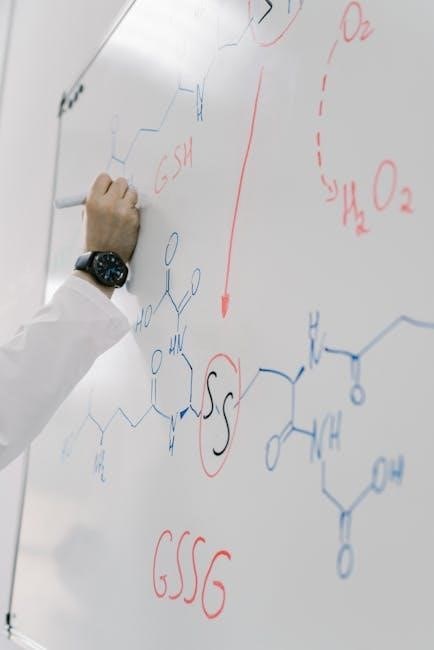
Hydroxylic solvents (like water and alcohols) can hydrogen bond, which solvates and hinders larger, more polarizable nucleophiles. Smaller, less solvated nucleophiles become relatively stronger. Therefore, ranking requires considering both intrinsic nucleophilicity and the degree of solvation; Mastering this concept is vital for predicting reaction rates and understanding why certain nucleophiles are favored in specific reaction conditions.
Accurate ranking is key to predicting reaction outcomes.
Factors Affecting SN2 Reaction Rates
SN2 reactions are highly sensitive to several factors, primarily the structure of both the substrate and the nucleophile, and the nature of the solvent. Unlike SN1, SN2 reactions occur in a single, concerted step – meaning the rate is dictated by how easily the nucleophile can approach and attack the electrophilic carbon.
Steric hindrance is paramount. The UTDallas practice problems present compounds like (CH3)3CCH2I and (CH3)2CHI, forcing you to evaluate how bulky groups around the reactive carbon impede nucleophilic attack. More substituted carbons lead to slower SN2 rates.
Nucleophile strength also matters; stronger nucleophiles accelerate the reaction. Furthermore, the concentration of the nucleophile directly impacts the rate, as it’s a first-order reaction with respect to the nucleophile. The practice problems explore this, asking about the effect of increasing iodomethane concentration. Finally, polar aprotic solvents (like DMF) are favored as they don’t solvate the nucleophile, leaving it ‘free’ to attack.
Understanding these factors is crucial for predicting SN2 reactivity.
Steric Hindrance in SN2 Reactions

Steric hindrance profoundly impacts SN2 reaction rates. Because the SN2 mechanism involves a backside attack by the nucleophile, any bulkiness around the carbon undergoing substitution creates a physical barrier. The UTDallas practice problems directly address this, presenting a series of alkyl halides with varying degrees of substitution.
Consider the examples provided: (CH3)3CCH2I, (CH3)3CCl, (CH3)2CHI, and (CH3)2CHCH2CH2CH2I. Tertiary alkyl halides, like (CH3)3CCl, are virtually unreactive via SN2 due to extreme crowding. Secondary alkyl halides, such as (CH3)2CHI, react slower than primary ones. Primary alkyl halides, like (CH3)2CHCH2CH2CH2I, experience minimal steric hindrance and thus exhibit faster SN2 rates.

The transition state in an SN2 reaction involves five groups around the central carbon. Bulky substituents destabilize this transition state, raising the activation energy and slowing the reaction. Therefore, predicting relative SN2 reactivity requires visualizing the spatial arrangement of groups and assessing the degree of crowding.
Mastering this concept is vital for accurate predictions.
SN1 Reaction Mechanism: Step-by-Step
The SN1 mechanism unfolds in two distinct stages: ionization followed by nucleophilic attack. The UTDallas practice problems emphasize understanding this stepwise process, often requiring detailed mechanism drawings. First, the leaving group departs, forming a carbocation intermediate. This is the rate-determining step, heavily influenced by carbocation stability.
The second step involves the nucleophile attacking the carbocation. Because the carbocation is planar, the nucleophile can attack from either face, leading to racemization if the starting material is chiral. The practice exercises challenge you to illustrate these steps accurately, showing electron flow with curved arrows.
Solvent plays a crucial role in stabilizing the carbocation intermediate, promoting ionization. Understanding how protic solvents assist this process is key. The provided examples often involve solvolysis, where the solvent acts as the nucleophile.
Practice drawing mechanisms to solidify your understanding of SN1 reactions.
Carbocation Stability and SN1 Reactions
Carbocation stability is paramount in SN1 reactions, directly impacting the reaction rate. The UTDallas practice problems frequently assess your ability to predict reaction rates based on carbocation stability. Tertiary carbocations are more stable than secondary, which are more stable than primary, due to hyperconjugation and inductive effects.
Resonance stabilization further enhances carbocation stability. Allylic and benzylic carbocations benefit from delocalization of the positive charge, significantly accelerating SN1 reactions. Practice identifying these resonance structures is crucial for solving related problems.

Rearrangements can occur if a more stable carbocation can be formed through a hydride or alkyl shift. Recognizing the potential for rearrangements is vital when predicting SN1 products. The practice materials may present scenarios requiring you to identify the major product formed after rearrangement.
Mastering carbocation stability is essential for predicting SN1 reaction outcomes.
The Role of Solvent in SN1 and SN2
Solvents profoundly influence SN1 and SN2 reaction rates and mechanisms. Polar protic solvents (like water and alcohols) stabilize carbocations through solvation, favoring SN1 reactions. They also hydrogen bond with nucleophiles, hindering their reactivity in SN2 reactions.
Polar aprotic solvents (like DMF and DMSO) enhance SN2 reactions by selectively solvating cations, leaving nucleophiles “naked” and more reactive. The UTDallas practice problems often involve reactions in DMF, highlighting its role in promoting SN2 pathways.
Solvent effects are demonstrated in solvolysis reactions, where the solvent acts as the nucleophile. The rate of solvolysis changes with solvent composition, as seen in the t-butyl chloride example – a higher water content accelerates the reaction.
Understanding solvent properties is key to predicting reaction outcomes and interpreting experimental observations.
Hydrolytic Solvents and Solvolysis
Solvolysis is essentially a nucleophilic substitution reaction where the solvent acts as the nucleophile. Hydrolytic solvents, like water or aqueous ethanol, are particularly relevant in solvolysis processes. The UTDallas practice problems directly address this concept, asking which compound undergoes solvolysis most rapidly in aqueous ethanol.
SN1 reactions frequently proceed via solvolysis due to the formation of a carbocation intermediate, which is then attacked by the solvent. The rate of solvolysis is influenced by factors like carbocation stability and solvent composition.
Interestingly, the provided document notes t-butyl chloride solvolysis is slower in 70% water/30% acetone than in 80% water/20% acetone. This demonstrates that increasing the water content – the nucleophile – accelerates the solvolysis rate.
Mastering solvolysis requires understanding the interplay between solvent properties, carbocation stability, and reaction mechanisms.
Predicting SN1 vs. SN2: Substrate Structure
Substrate structure is a cornerstone in predicting whether a reaction will favor SN1 or SN2 pathways. The UTDallas practice problems highlight this with a direct comparison: which undergoes substitution faster, 2-chloropropane or 1-chloro-2,2-dimethylpropane with Na–CCH?
SN2 reactions thrive with less hindered substrates – primary alkyl halides are ideal. Steric hindrance around the reactive carbon dramatically slows SN2 rates. Conversely, SN1 reactions prefer substrates that can form stable carbocations, like tertiary alkyl halides.
1-chloro-2,2-dimethylpropane, being a tertiary halide, will favor SN1 due to carbocation stability. 2-chloropropane, a secondary halide, can undergo both, but SN2 is still possible.
Therefore, understanding the degree of substitution and steric bulk is crucial for accurately predicting the dominant mechanism. Practice identifying these structural features to confidently tackle SN1/SN2 predictions.
Practice Problem 1: Identifying Bond Polarity
Let’s begin with a foundational concept: bond polarity. The UTDallas practice exercise starts with this, asking you to represent the carbon-chlorine bond in methyl chloride. This isn’t just about drawing arrows; it’s about understanding electronegativity.
Chlorine is significantly more electronegative than carbon. This means it pulls electron density towards itself, creating a dipole moment. Representing this visually is key – the carbon develops a partial positive charge (δ+), and chlorine a partial negative charge (δ-).
The correct representation will show this unequal sharing of electrons. Think of it as a tug-of-war, with chlorine winning! This polarity is crucial because it makes the carbon susceptible to nucleophilic attack in both SN1 and SN2 reactions;
Mastering this initial step builds a strong foundation for understanding how nucleophiles interact with electrophilic carbons, setting the stage for more complex mechanism analysis.
Practice Problem 2: Reaction Mechanism – Detailed Steps
The UTDallas exercise challenges you to provide a detailed, stepwise mechanism for a given reaction. This is where understanding the nuances of SN1 and SN2 truly shines. A robust mechanism isn’t just about reactants and products; it’s about how they transform.
For SN1, illustrate the two-step process: first, carbocation formation (slow, rate-determining step) with the leaving group departing. Second, nucleophilic attack on the carbocation (fast). Show all intermediates and charges clearly.
For SN2, depict the concerted, one-step mechanism. The nucleophile attacks from the backside, simultaneously displacing the leaving group. Illustrate the transition state with partial bond formation and breakage.
Don’t forget to use curved arrows! They demonstrate electron flow, the heart of any organic mechanism. Correctly showing these steps demonstrates a deep understanding of reaction kinetics and stereochemistry.
Practice Problem 3: Ranking Nucleophilicity in Hydroxylic Solvents
The UTDallas practice problem asks you to rank species by nucleophilicity in hydroxylic solvents (like water or alcohols). This isn’t as straightforward as simply looking at basicity! Hydroxylic solvents significantly impact nucleophilicity through solvation.
Remember, nucleophilicity is kinetic, while basicity is thermodynamic. Stronger bases aren’t always stronger nucleophiles. Hydroxylic solvents strongly solvate small, highly charged anions (like HO–) through hydrogen bonding, hindering their nucleophilicity.
Consider the given species: CH3CO2–, CH3S–, HO–, and H2O. CH3S– (thiolate) is a large, polarizable anion and will be the strongest nucleophile despite being a weaker base than HO–. HO– is heavily solvated.
The ranking, from increasing nucleophilicity, is: CH3CO2– < H2O < HO– < CH3S–. Understanding solvent effects is crucial for accurate predictions.
Practice Problem 4: Stereochemistry of SN2 Products
The UTDallas problem focuses on the stereochemical outcome of an SN2 reaction using (S)-2-iodopentane and KCN in DMF. SN2 reactions are renowned for their characteristic stereochemical consequence: inversion of configuration at the stereocenter.
Why inversion? The nucleophile (CN– in this case) attacks from the backside of the leaving group (I), resulting in a “flipping” of the stereocenter’s configuration. This is akin to an umbrella turning inside out in the wind.
Starting with (S)-2-iodopentane, the product will be (R)-2-cyanopentane. DMF (dimethylformamide) is a polar aprotic solvent, ideal for SN2 reactions as it doesn’t solvate the nucleophile strongly, maximizing its reactivity.
Draw the Fischer projections to visualize the inversion clearly. The key takeaway is that SN2 reactions proceed with complete inversion, a defining feature distinguishing them from SN1 reactions.
Practice Problem 5: Effect of Iodomethane Concentration
The UTDallas exercise asks about the impact of increasing iodomethane (CH3I) concentration on the reaction with (CH3)3CO–. This reaction proceeds via an SN2 mechanism. SN2 reactions exhibit second-order kinetics – meaning the rate depends on the concentrations of both the substrate and the nucleophile.
Therefore, increasing the concentration of iodomethane will increase the reaction rate. Doubling the iodomethane concentration will approximately double the reaction rate, assuming the (CH3)3CO– concentration remains constant.
Rate = k [(CH3)3CO–] [CH3I]
This is because the SN2 mechanism involves a concerted, single-step process where the nucleophile attacks the substrate simultaneously as the leaving group departs. More iodomethane means more opportunities for these collisions and successful reactions.
Tertiary alkyl halides are sterically hindered, favoring SN1 pathways, but with a strong nucleophile like this, SN2 is still possible, and rate is concentration-dependent.
Practice Problem 6: Identifying Compounds for SN2 Reactions
The UTDallas practice problem presents five compounds (A-E) and asks which will undergo an SN2 reaction most readily. SN2 reactions are highly sensitive to steric hindrance. The less bulky the substrate, the faster the SN2 reaction.

Let’s analyze the options:
- A) (CH3)3CCH2I: Highly hindered – very slow SN2.
- B) (CH3)3CCl: Even more hindered – practically no SN2.
- C) (CH3)2CHI: Moderately hindered.
- D) (CH3)2CHCH2CH2I: Relatively unhindered.
- E) (CH3)2CHCH2CH2Cl: Unhindered, but chlorine is a poorer leaving group than iodine.
Therefore, (CH3)2CHCH2CH2I (D) will undergo SN2 most readily. The primary alkyl halide structure minimizes steric interactions, allowing the nucleophile to approach the carbon center for backside attack. While chlorine is a weaker leaving group, the significant reduction in steric hindrance outweighs this factor.
Remember: SN2 favors less substituted substrates and good leaving groups.
Practice Problem 7 & 8: Product Prediction and Comparison of Reaction Rates
UTDallas presents two related problems: predicting the major organic product of a reaction and comparing the rates of substitution for two different haloalkanes with a nucleophile (Na–CCH). These problems test understanding of both SN2 mechanisms and substrate reactivity.
For problem 7, the specific reaction isn’t provided, but the core skill is identifying the product formed via either SN1 or SN2. Careful consideration of the substrate structure and reaction conditions is crucial.
Problem 8 compares 2-chloropropane and 1-chloro-2,2-dimethylpropane. 2-chloropropane (secondary) will undergo substitution faster than 1-chloro-2,2-dimethylpropane (tertiary). Tertiary halides favor SN1 (elimination is also possible) due to steric hindrance inhibiting SN2, while secondary halides can undergo both, but SN2 is favored with a strong nucleophile like Na–CCH.
The substitution product from 2-chloropropane will be propyne (HC≡CCH3). Understanding leaving group departure and nucleophile attack is key to predicting the correct product.